Busy Bees
Helping the next generation of spellers to take off on their spelling bee journeys!
Navigate:
Posts:
Words in my Head
9/11/26
Dear Speller,
Have you ever had a song stuck in your head all day, like a record player that just won’t quiet down? When I was in middle school, that happened to me all the time, except I got words stuck in my head.
Back then, I would study so hard, that sometimes, I could hear the words ringing in my mind like bells, unwilling to stop. Often, it happened with words that were giving me trouble, such as “Carrickmacross,” and afterwards, I would remember them better.
I remember one day, I woke up at four in the morning to get on a plane, and even at that early hour, I kept thinking of the word “abomasum.” I could both see it and hear it in my mind, and it was driving me crazy. Finally, while sitting in the car, about to leave for the airport, I took out my phone and looked the word up in the dictionary. I listened to the pronunciation a few times, read the definition and root of origin, and then all of a sudden, I stopped thinking about it.
Although I stopped thinking about the word “abomasum,” the time I took to look it up and recall the definition and root of origin gave me a better understanding of the word. This repetition in my head is what led me to remember it. Perhaps repetition is key. Think about it; maybe when we think so hard that we cannot stop, and then we finally force ourselves to forget, we finally remember.
As Ever Yours,
Juliette Anderson
P.S. Strategy of the Week: Pick 20 words that are giving you trouble and make flashcards of them.
What Really Matters
9/2/26
Dear Speller,
The beginning of the school year is full of changes and adjustments, whether in school, extracurriculars, spelling, or something else. As you begin your studies this year, it may be helpful to think about what your goals are, and with those goals, what you want to prioritize.
When I was in middle school, I chose to prioritize my school work and spelling instead of spending a bunch of time making dinner in the evenings and going to ballet every single day. I realized it was okay to just heat up leftovers at night and skip ballet from time to time if it meant making progress in school and spelling. This made my life a lot easier; instead of having to get out of school, go to ballet, rush home, spend hours on homework, wait for dinner to be ready, and then study, I could get to studying pretty early on in the evening, while also completing all my homework: my two priorities.
This year, as you begin your spelling bee studies, I recommend you choose a few other things to prioritize, while knowing that it is okay not to go full out on everything.
As Ever Yours,
Juliette Anderson
P.S. Strategy of the Week: Make a plan for a daily schedule that you can default to in order to give yourself time to do everything you need to do.
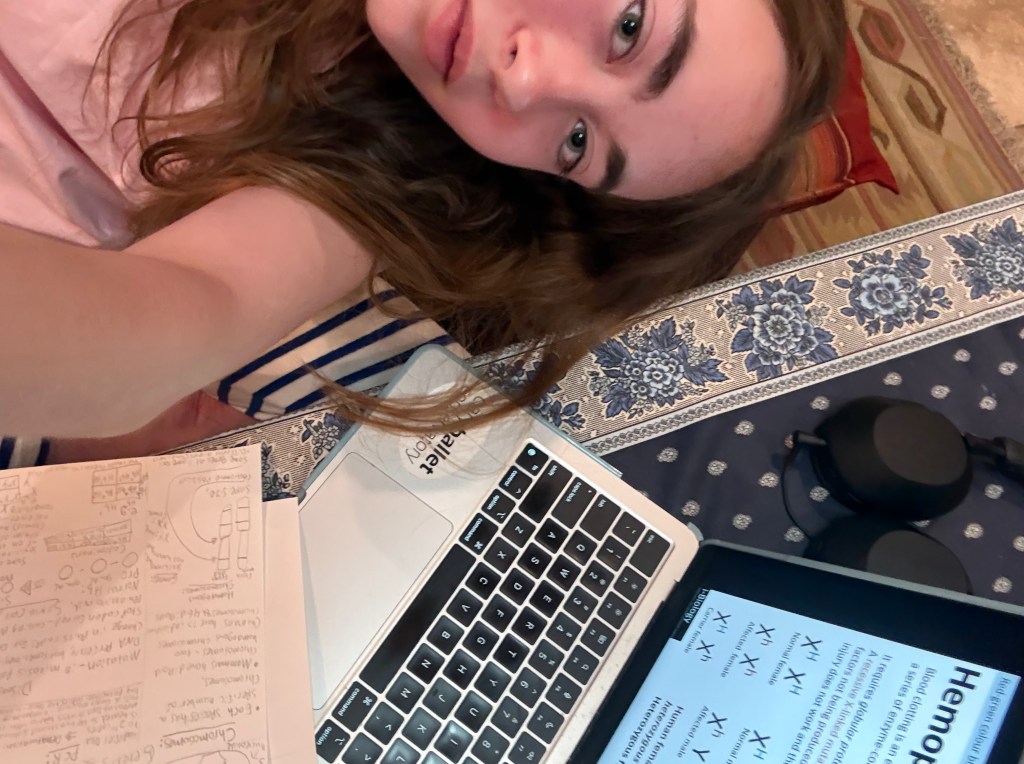
A more recent example of this is last year, when instead of going to Prom with most of my classmates, I prioritized my final exam preparation, staying home to study. I called it “Study-Prom.”
Acing Two Subjects with One Word
8/16/26
Dear Speller,
I can think of at least one person in your life from whom you can learn A TON. That is your teacher(s).
As the 2026-2027 academic year begins, and your spelling bee studies start to intensify, you can look to your teachers for knowledge.
One regret of mine is not writing down every single word my teachers used that I didn’t know during my time as a speller. Not only can this give you brand new words to study, but it can also allow you to learn new root words and increase your vocabulary, which is huge!
As you start classes this year, I recommend getting in the habit of carrying around a sheet of paper to accumulate a list of new words. Wouldn’t it be amazing to have a strategy for becoming an even stronger student and speller all at once?! I think you could gain a lot from this.
As Ever Yours,
Juliette Anderson
P.S. Strategy of the Week: Make a list of new words your teachers use, and see what you think of it.
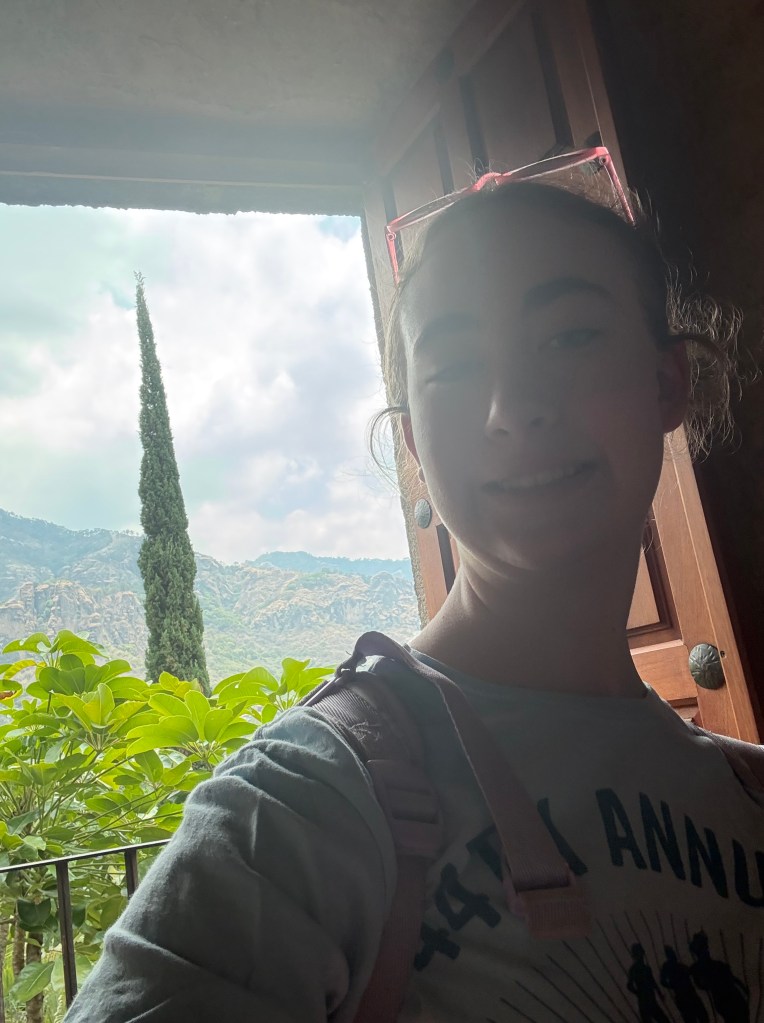
I made a mental note of many new words on my recent trip to Mexico.
Worlds Collide
7/28/26
Dear Speller,
Looking back on my spelling bee journey, one word that stands out to me is “rond de jambe.” This is not because it was particularly difficult to spell; it was not because it was super easy to spell either; it was also not because I thought it sounded funny. A rond de jambe is a common step in ballet, which dancers do every single day during technique class. As a dancer myself, I enjoyed making the connection between spelling and ballet.
As a student, you almost certainly have many interests outside of spelling, and making connections between spelling and your other interests can make studying a lot more enjoyable. The bee uses so many words, all of which have different meanings, and you are bound to find words that you are familiar with from other parts of your life. To find these words that stand out to you, you can also do advanced searches on the Merriam Webster Unabridged Dictionary to find words that relate to a specific topic. You can also look through Word Club or the bee’s study list.
Using spelling to connect with your other interests and learn more about other subjects is a lot of fun, and it is also a great way to expand your vocabulary, making sure that you gain as much as you can from your spelling bee journey.
As Ever Yours,
Juliette Anderson
P.S. Strategy of the Week: Try to find at least five words that relate to your other interests.
Eye on the Prize
6/30/26
Dear Speller,
I am sure you have realized by now that preparing for a spelling bee is not easy. It requires a lot of time, patience, effort, and resilience. You cannot learn to be a great speller overnight. At times, it may feel hard to stay motivated, and that is okay; you can do this!
I remember when I was in seventh grade, and one day, a classmate came up to me, and she asked me if I ever felt the need to do something other than study, such as watching a movie. I thought about that for a while, and then finally, I realized that it was not necessarily about whether I wanted to do something entertaining for a change, but more than anything, I wanted to succeed in the spelling bee, and for me, that drive outweighed all other desires.
I am not saying that you cannot live your life or have fun, but if you ever have trouble maintaining focus when studying, it may help to think about the best possible outcome in the spelling bee: victory. Think about how much you want to win, and that will power you to keep studying. Keep your eye on the prize!
Best,
Juliette Anderson
P.S. Try your best to maintain focus as we approach July.
Natural Instinct
Dear Speller,
When I think of my final exams in ninth grade, one memory that stands out to me is sitting in my school’s commons area with seven pencils, two erasers, and a highlighter in my hand, and from across the crowded room of high schoolers, hearing a classmate of mine telling his friends that “It isn’t good to study for finals, because studying is not trusting your natural instinct.”
As kindly as possible, I am going to go against my classmate for a second, by saying that studying is actually strengthening your natural instinct.
At least when it comes to spelling bees, it is necessary to study, because it strengthens your knowledge of thousands of words, so that, theoretically, if asked to do so, you could spell any given word backwards in your sleep. Obviously, it will never come to that, but that’s the idea. This idea, however, that at any moment, you are prepared to spell any word, is instinct. This is why before spelling bees, my mom always told me, “Never second-guess yourself.”
Why would you go against your instinct, when you have spent months trying to engrain all these words into your memory? Why would you go against your instinct, even when it has been trained to know what is best? In my mind, it’s as simple as that.
As a speller, anytime that I was unsure of how to spell a word, it was almost always a result of my overthinking it. My first idea of the spelling was always correct, and only when I questioned myself, trying to come up with a new spelling, did I mess up on a word that I had studied.
This week, when in doubt, go with your instinct; never second-guess yourself.
As Ever Yours,
Juliette Anderson
P.S. Strategy of the Week:
Try to go seven days without second-guessing yourself, and see what happens!
Tenth Time’s a Charm
6/12/26
Dear Speller,
As a seventh grader, I recall studying for the spelling bee in Academic Workshop (study hall) one day, and seeing a teacher come up to me, saying, jokingly, “Juliette, you spelled ‘giraffe’ wrong like ten times!” The truth is, I had not spelled “giraffe” wrong even once, let alone ten times. Instead, I had spelled “gesellschaft” correctly ten times.
Writing words out ten times on a sheet of paper was my go-to study strategy when I was at school. I became a master of squeezing as many rows of ten words onto a sheet of paper as possible, trying to save room. Sometimes, I would not bother to count how many times I had written a word, in the hopes that I would “accidentally” write the word a few extra times; I became a master at that, as well.
This technique for studying was a lot of fun, but looking back, I would also say that it was one of the most efficient. When I identified a word that was difficult for me to spell, writing it out was the best thing I could do.
When writing each word, there was a solid minute when all my attention was on that word and its spelling. Moreover, my teachers always used to talk about hand-brain connection, stressing that when you write something out by hand, you are much more likely to remember it; I definitely experienced this when I wrote a word out ten times. Finally, being able to see the word on paper was another level of learning. I could better visualize the word, and I could watch as my hand spelled it out. As a result, I could later remember how it was spelled.
Maybe you are hesitant to try this strategy, but trust me; I spent five years doing it, and I can say with certainty that it helps. Perhaps you will not find this to be as effective as I did, but I guarantee that it will benefit you to some degree. You never know unless you try!
As Ever Yours,
Juliette Anderson
P.S. Strategy of the Week: Pick at least ten words that are giving you trouble, and write them all out ten times.
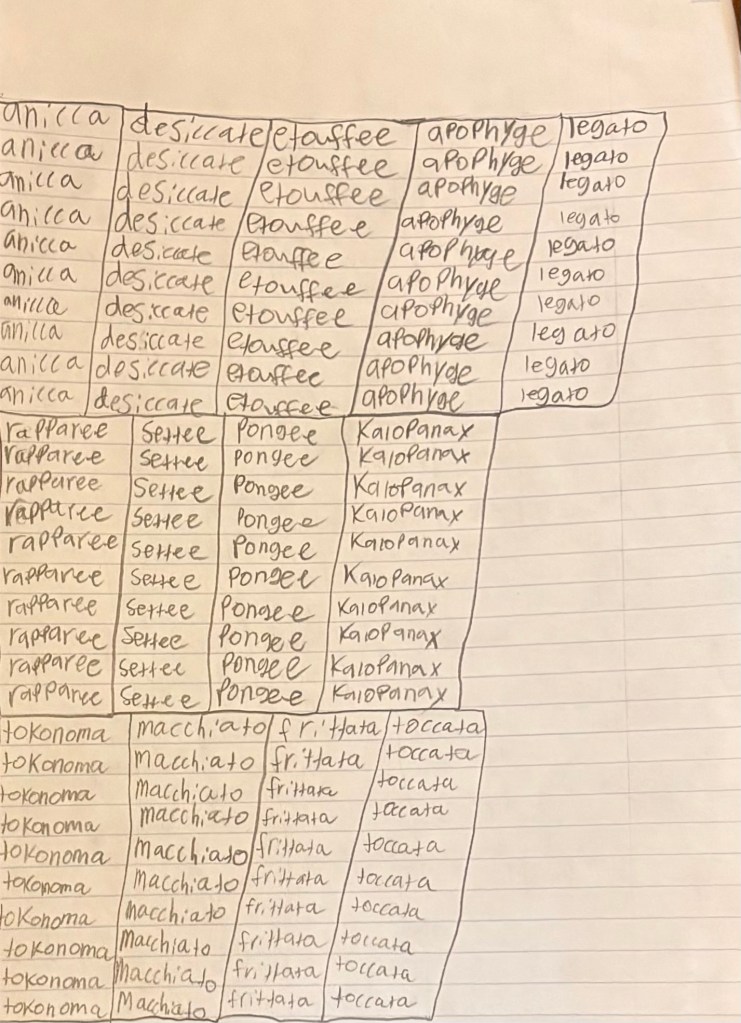
Here is an example.
Starting Off on the Right Foot
5/28/26
Dear Speller,
What better way to kick off the summer than to spend a few days watching the Scripps National Spelling Bee on TV? It was so refreshing and nostalgic to be able to witness the competition once again.
This year’s competition has really reminded me just how important it is that spellers learn as many root words as they possibly can. When it comes to off-list rounds (of which there are MANY), you cannot memorize the entire dictionary, but you can learn the smaller words that make up all the big words that you will be tasked with spelling in the bee.
While tonight marks the end of the 2026 spelling bee season, it also marks the beginning of the 2027 season. What better way to kick off the new year of studies than with some brand new root words?
To get you started, I am linking some root word dictionaries below, but I hope that you will be curious enough to venture beyond these dictionaries. Have fun spelling this year!
As Ever Yours,
Juliette Anderson
P.S. Strategy of the Week: Learn 50 new intriguing root words, as well as a few words that contain each root.
Don’t Look Away
5/22/26
Dear Speller,
Whenever I would walk into a spelling bee, I would always be shocked by how big the stage was, as well as how many seats there were in the audience; I was surprised by how real everything was. The thing is, when I actually began spelling, I was nowhere near as nervous as I had imagined I would be, but I was still scared.
It is okay to be afraid during a spelling bee; it’s more than okay, really, it’s perfectly normal! When I was scared, I would always look to someone in the audience who made me feel safe. For me, that was my mom. Throughout my time in the spelling bee (and still today), my mom was my best friend: my study buddy, my number one fan, and someone who made me feel encouraged. For you, this person may be someone else, but I encourage you to find that person. When you are scared, you can look in their direction, and it will help you to feel grounded in the moment, supported, and calm.
As Ever Yours,
Juliette Anderson
P.S. Strategy of the Week: Find someone who makes you feel encouraged!
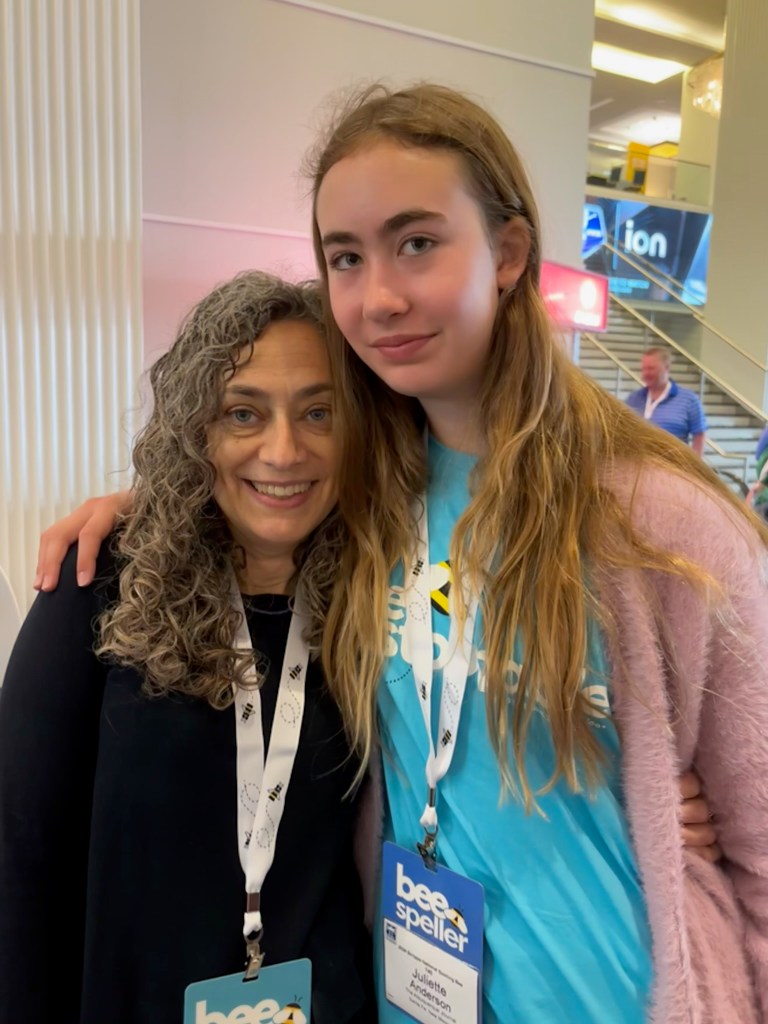
My hero: my mom
The Benefits of Bee Week
5/10/26
Dear Speller,
Do you know what is special about May? It is the month of the Scripps National Spelling Bee!!! Bee Week is the best week of the year, and whether or not you are competing, you should be planning on having A LOT of fun. Obviously, if you are competing, you will be very busy all week, but for those of you who are not competing, this is still a great opportunity to learn!
At around this time last year, I was a bit of a rebel, and now, I have a confession to make. At the end of the year, I skipped my class’s end of year rafting trip, and it was not due to anxiety over being in the outdoors (although that was part of it), but really, it was because I NEEDED to watch the spelling bee.
For two days in a row, I woke up at the crack of dawn, got out of bed, threw on a sweatshirt, and was ready to watch the spelling bee at six AM. Sure, I was tired, but I was so excited! In fact, this is a new tradition of mine, as I plan on watching the Scripps National Spelling Bee in its entirety, each year for the foreseeable future. Watching the spelling bee is also a great learning experience! After the preliminaries, I wrote down each word that was given to a speller, and in the end I had a list of spelling bee words that would be great for a young speller to study from, just to get used to the difficulty of the words at national level.
Additionally, the announcers at Nationals often have really interesting things to say, which, as a speller, you can use to your advantage. Specifically, when the 2024 Scripps National Spelling Bee Champion, Bruhat Soma, spent a few minutes announcing last year, I learned SO MUCH from what he had to say.
I know it may not be the most fun thing ever to spend hours a day sitting in front of the TV; I get it, but come on, it’s Bee Week, and Bee Week is the best week, both for having fun, and for learning.
P.S. Strategy of the Week: Make plans to watch the Scripps National Spelling Bee at the end of the month.

This is the result of my goofing around while watching the preliminaries of the Scripps National Spelling Bee early in the morning last year, but hey, at least it’s a spelling bee sweatshirt!
The Complex Definition of “You”
5/3/26
Dear Speller,
Do you remember all the words that have gotten you eliminated over the years? I remember all of mine. In third grade, it was “therapeutic,” then it was “oodles” and “camalote.” After that, it was “cambric,” and then it was “holocaust.” My final year, I was eliminated on “Catoctin.”
In my notes app, I have a list of words I hate. This list consists solely of the words mentioned above, and I wonder why. (Not).
Every once in a while, my ballet teacher will describe a step as “therapeutic.” I would always love to ask him why he is swearing, especially as a teacher, but then I remember that I am the only one who considers “therapeutic” to be a bad word.
Why am I programmed to hate these words instead of simply learning from them?
I feel that as a general rule, people are so focused on their negative aspects. I always find that in quiet moments, I seem to be bullying myself, thinking thoughts like, ugh, Juliette, you are SO stupid! This is the perfect opportunity for you, as a child, to learn from my mistakes.
As a speller, it is important to understand that one word does not define you. You know how to spell thousands of really challenging words, and the fact that there is one word that may challenge you, does not mean that you are not a good speller. Why not focus on all the words that you do know? Think about it this way: each year, nearly 11 million students compete in spelling bees, and in the end, only one person is named the Scripps National Spelling Bee Champion. Do you think that all those other spellers are dumb just because they spelled a word wrong? I know I don’t! You should view yourself in the same way. Life would be so much easier if instead of spending time crying after being eliminated for misspelling one word, we were all just celebrating all the words that we spelled correctly. I will leave you now, to think that over for a few days.
As Ever Yours,
Juliette Anderson
P.S. Strategy of the Week: Pick out 50-100 words that give you trouble, and spend time going over them again and again, but be kind to yourself. It is okay to make mistakes!
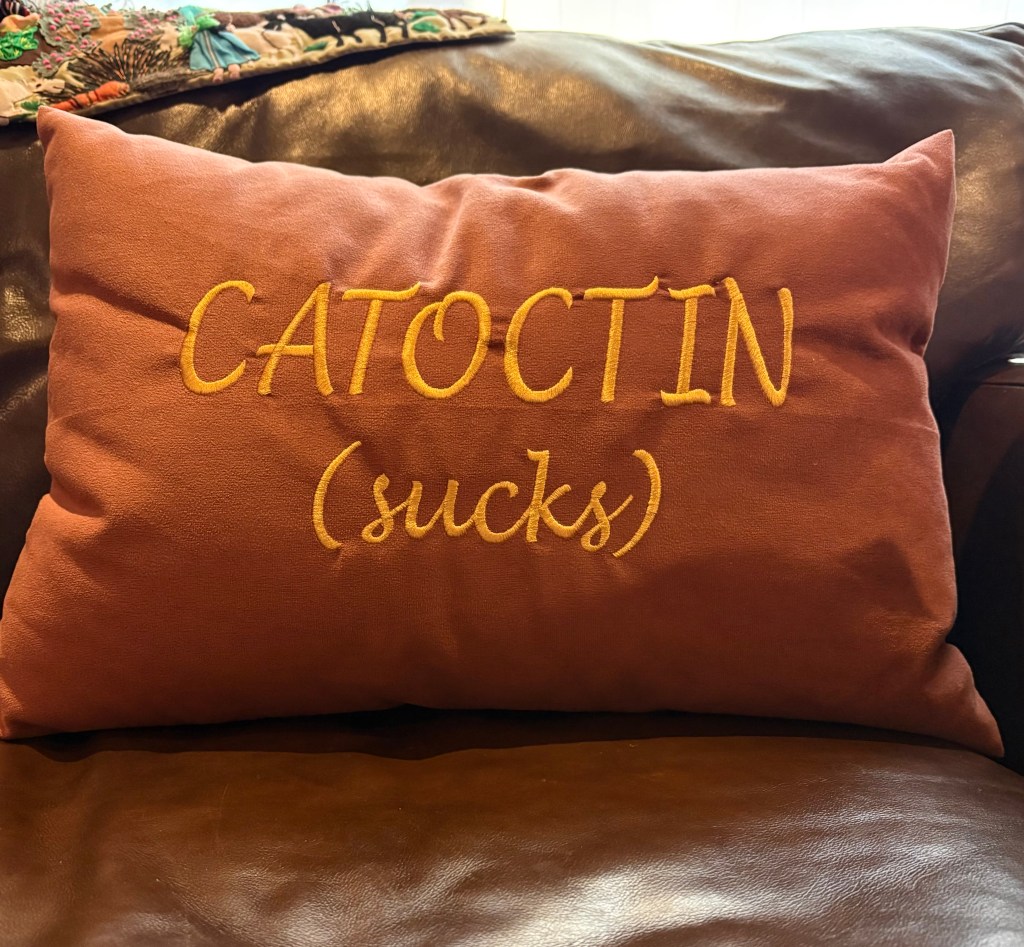
My fourteenth birthday present…
The Power of Memory
4/26/26
Dear Speller,
When I think of the spelling bee, I automatically want to burst out laughing and smiling, but I also want to cry. The spelling bee holds so many memories for me, both bad and good, and these memories are what keep me here, as a part of the spelling bee community.
Personally, many memories stand out to me. There was the time when, as a fourth grader, I watched my mom fall to her knees with joy after I won the spelling bee.
Then, there was the day I won the district spelling bee as a seventh grader, and carried my trophy to my friend’s house, where we met, and drove off on a road trip. For the first time in months, I felt like I could relax, if only for a few days.
Then of course, I remember when I met Scripps National Spelling Bee Champions Jacques Bailly, Vanya Shivashankar, and Dev Shah. I had looked up to these spellers for such a long time. They were my idols, people I read about in the news, people who were bigger than life, like characters from a fairytale. Suddenly, they were popping out of the pages in human flesh, greeting me with welcoming smiles. My father even sat next to Jacques Bailly on the bus when we returned to the Gaylord Hotel from our picnic at Audi Field.
Then of course, there are the bad memories, such as those late nights I spent in fifth grade, when, even months after a disappointing spelling bee, I would lie awake at night, unable to sleep, hysterically crying for the competition I had lost.
Whether these memories are good or bad, they fuel my love for the spelling bee, as I feel something for this competition that I do not feel for anything else. I feel that the spelling bee is my passion.
As you continue competing in spelling bees, I encourage you to keep making these memories as well. While spelling bees can be stressful, try not to always feel stressed. Work hard, study all the time, but also be in the moment. The more memories you make, the more you will end up loving the spelling bee.
The years I spent competing in spelling bees have been the best years of my life, at least so far. This may be the case for you as well, so try to make some long-lasting memories.
As Ever Yours,
Juliette Anderson
P.S. Strategy of the Week: Start keeping a journal of your time studying. Write about how you feel, what stresses you, and what excites you. Include as many words from your study list as possible, in order to ensure that in this record keeping, you are also getting more prepared for upcoming competitions.
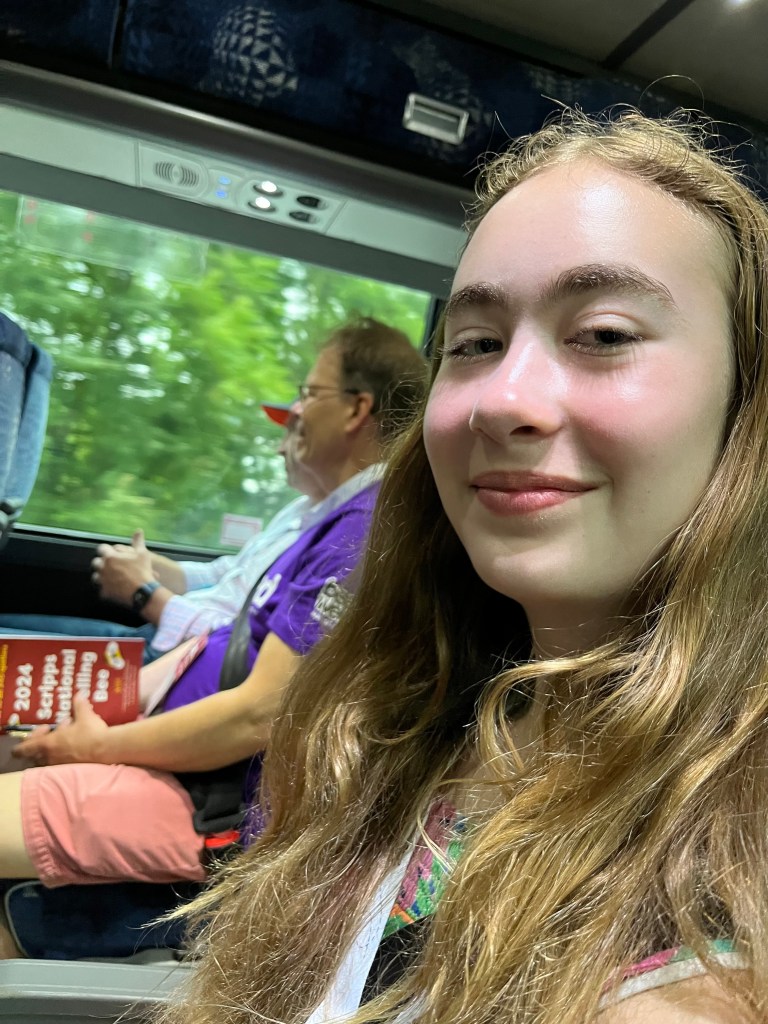
My dad sitting with Jacques Bailly and somewhat me, on the bus (also one of the highlights of my life)
Speak Out
4/20/26
Dear Speller,
I know this is going to sound weird coming from the girl who will never talk to anyone unless they talk to her first, the girl who will always give the shortest answers to everything, but today, I am going to talk to you about talking to reporters.
In the fifteen years that I have been alive, I have gone through many news interviews: some as the one being interviewed and some as the reporter (actually, most of them were all in the last two years). When you are a speller, news interviews are all perfectly normal. It is something to get used to. Perhaps you are like me and have a hard time talking to people. That is okay; if I can do it, you can do it. Trust me.
The most important thing is to say exactly how you feel. Be honest with the reporter. As a student journalist myself, I can say that when I am interviewing, I just want to hear something interesting. If you aren’t sure what to say, just think about what you would like people to know about this spelling bee and who you are as a speller. That is what you should tell the reporter. This is what my mom has always told me to do, and she says that nine times out of ten, you will be able to squeeze what you want to say into at least one question that the reporter asks.
Believe me, the first time I ever spoke to a reporter all I said to every question was “umm…yeah.” Interview skills come with time, but remember that talking to a reporter is never as hard as you think.
As Ever Yours,
Juliette Anderson
P.S. Strategy of the Week: Select fifty words that give you trouble, and write them each out ten times.
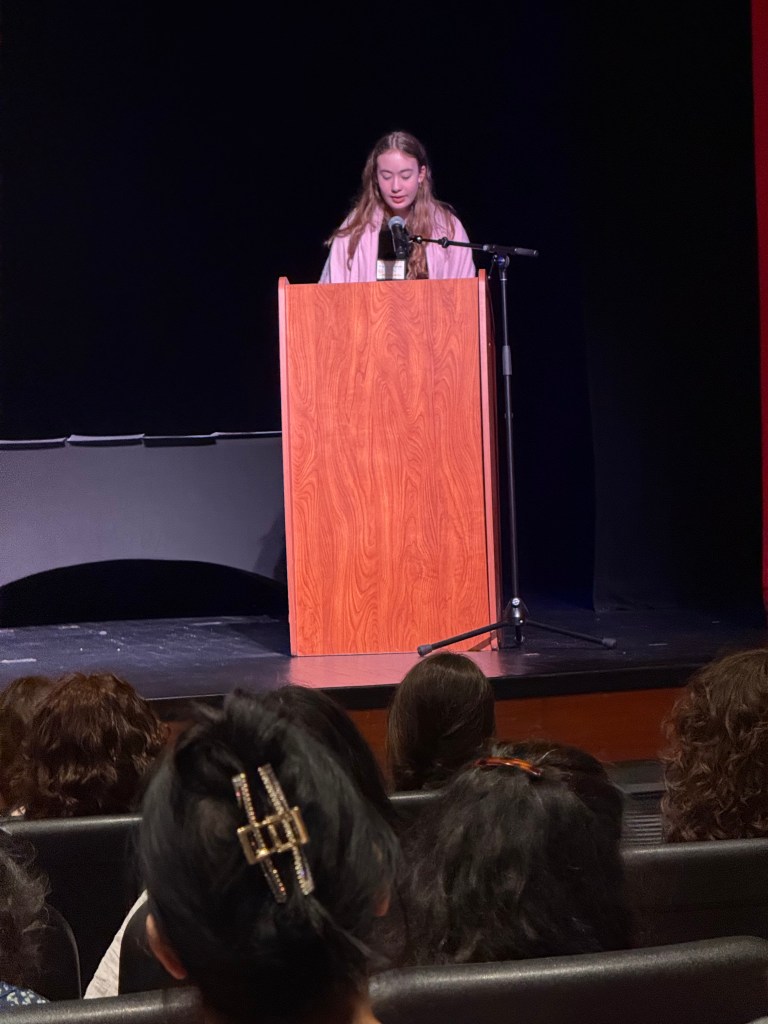
Saying how I feel…
Communicate
4/12/26
Dear Speller,
Each time you stand up at the mic, your main goal, of course, is to spell your word correctly. How do you do this? Well, the most obvious answer (and probably the best answer) is to study super hard in the months leading up to the spelling bee. When you are standing at the mic, spelling your word, however, you cannot control how hard you worked in the past, so what if during the spelling bee, you come across a word that you do not remember? This is when you need to get help.
Obviously, as a speller, you are the most important person in the spelling bee, and all the officials are there just for you. A good pronouncer will understand this, doing all that is in their power to make sure that you understand the word. With this in mind, it is always helpful to ask questions. Remember, there are a few things that you can always ask the pronouncer for, such as a definition, an alternate pronunciation, a sentence, the language of origin, the part of speech, and you can also ask the pronouncer to repeat the word. If you do not recognize a word, your go-to thing to ask for is an alternate pronunciation. There is a good chance that the pronouncer is just pronouncing the word in a way that you are not familiar with. If that still does not help, go ahead and ask all the other questions; that way, you can get to understand the word as best you can. You can then make your best educated guess when it is time to spell the word.
If you are a total spelling bee nerd like me, you can also make some jokes to lessen your stress, and ask the pronouncer for the spelling of the word or to sing it in a song. Sidenote, if you do not get the references, check out Akeelah and the Bee as well as Spelling the Dream.
As someone who is so shy that half the time, I won’t even say hello to someone, even after they say hello to me, asking questions was never my strategy in a spelling bee. Regardless, I still recognize that it can be a game changer; you just need to feel comfortable talking to people (in other words, don’t be like me).
If you do not learn anything else from this, at least remember to talk to the pronouncer. They are there for you, and want to help you succeed. In your next spelling bee, try it out. Talk to the pronouncer; it can only help.
As Ever Yours,
Juliette Anderson
P.S. Strategy of the Week: When studying, and just in general, get in the habit of asking questions.
Not Afraid to Celebrate
4/5/26
Dear Speller,
Sometimes it may feel like the reward for winning a spelling bee is more of a punishment: more stress, more hard work, and no time to relax. As a speller, I used to always dream of the day when I suddenly wouldn’t have to spend every waking hour studying, when I could just simply exist, and that would be enough. You may be annoyed that after such a well-deserved victory, you cannot even pause to pat yourself on the back; you simply have to just keep digging your face in your word list. Let me tell you something, though: it is okay to take some time to celebrate.
Each time I won a spelling bee, I would often take a day or two to just relish in my victory. Of course, I would never stop studying all together, but instead of eight hours of studying, I would spend two or three hours studying, just for a couple of days, while I celebrated my victory. It is okay to celebrate sometimes. Your brain needs a break anyway, and this is the perfect excuse.
Dear champion, view this as an assignment rather than a suggestion: go outside and take a walk, read a book, write a poem, bake a cake; whatever you do, however, do not forget to never completely stop studying. Additionally, the ideal break should never last longer than three days.
As Ever Yours,
Juliette Anderson
P.S. Strategy of the week: Review the entire Words of the Champions list, and highlight any words you get wrong.
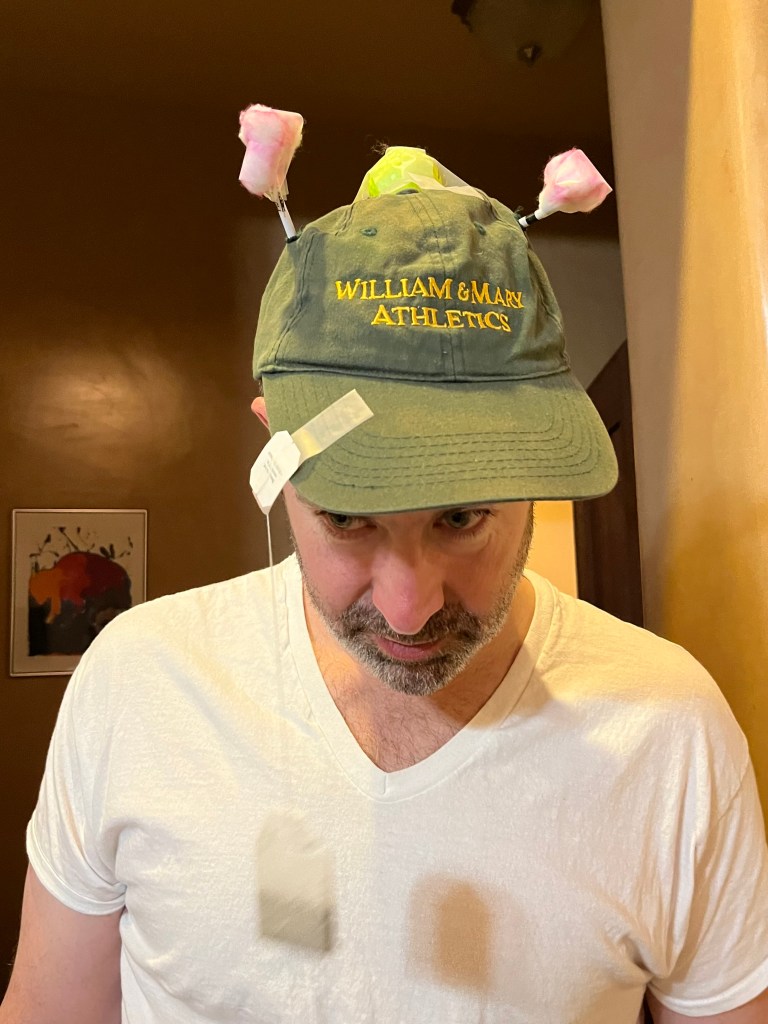
The day after winning the New Mexico State Spelling Bee, I had fun decorating my dad’s golf hat. It’s beautiful, I think, but unfortunately, he hasn’t worn it since.
Click on the links below to view older posts!
More posts coming soon!

